
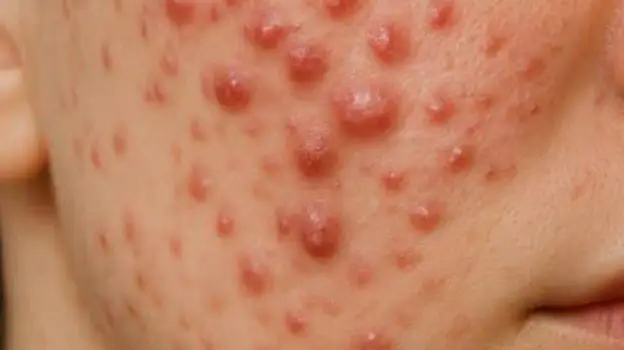
 h2>What cystic acne is
Cystic acne is a severe inflammatory form of acne involving deep lesions beneath the skin. These lesions are often painful and may occur alongside other forms of acne, including blackheads, whiteheads, papules, and pustules.
Because cystic lesions develop deeper in the skin and cause more intense inflammation than superficial pimples, they can be more difficult to manage. Severe inflammatory acne, including deep nodules and cysts, carries a greater risk of permanent scarring. The risk is not limited to the size of an individual lesion; repeated or widespread inflammation can also contribute to lasting skin changes.
The word 'cystic' is commonly used to describe deep, inflamed acne lesions, but people cannot reliably confirm the diagnosis by looking at or feeling a bump. Nodules, boils, and other skin conditions can look similar. A dermatologist can assess the lesion, the surrounding skin, and the overall pattern of breakouts.
Deep painful lesions, acne that is leaving scars, or acne causing substantial distress should be medically assessed. Effective treatment can help limit additional inflammation and reduce the chance of further scarring.
What cystic acne looks and feels like
Cystic acne usually appears as a prominent, swollen bump that sits deeper in the skin rather than as a small surface blemish. It may be red, tender, or painful, and some lesions may contain pus. The skin over the lesion can feel tight or swollen, while the lump itself may remain noticeable even when there is no visible white or yellow head.

Pain and tenderness are useful recognition clues. A superficial pimple may be irritating or sore, but a deep acne lesion is more likely to feel firmly embedded, persist, and hurt when touched or when pressure is placed on the surrounding skin. Several deep lesions may occur together, particularly on acne-prone areas such as the face, chest, back, or shoulders.
Color can be harder to interpret across different skin tones. Redness may be less conspicuous on darker skin, so the absence of obvious redness does not rule out significant inflammation. Depth, swelling, tenderness, pain, and persistence may be more informative than color alone.
A lesion that looks cystic is not necessarily cystic acne. Appearance by itself cannot distinguish every deep acne lesion from a nodule, boil, or another skin condition. Avoid trying to puncture or drain an uncertain lump. If it is unusually painful, rapidly changing, or accompanied by signs of infection, medical assessment is appropriate.
Understanding cystic acne risks and treatment
Cystic acne versus nodules, ordinary pimples, and boils
Ordinary acne lesions are generally more superficial. Blackheads and whiteheads are clogged pores, while papules are small inflamed bumps and pustules contain visible pus near the surface. These lesions can still become irritated or leave marks, but deep cystic acne is more likely to produce substantial swelling, tenderness, and pain beneath the skin. Severe inflammatory lesions also have a greater risk of permanent scarring.
Nodules are deep, firm acne lesions. Cysts are conventionally described as deeper lesions that contain pus. Severe acne may include both cysts and nodules, and the terms are not always used consistently outside clinical care. A person cannot reliably identify the exact type of lesion from texture or appearance alone, especially when inflammation is prominent.
A boil is different in concept because it is an infection involving a hair follicle or nearby skin. It may resemble an inflamed acne lesion, particularly when it is red, swollen, painful, or filled with pus. A rapidly worsening lump, marked warmth, spreading redness, or systemic symptoms should not be assumed to be acne.
Do not squeeze, puncture, or attempt to drain a deep lesion at home. Manipulation can worsen inflammation and increase the likelihood of permanent scarring. When a lump is uncertain, unusually painful, or changing quickly, a clinician can distinguish acne from a boil or another condition and select appropriate care.
Why deep acne develops and where it appears
Acne begins when hair follicles become blocked. Oil, dead skin cells, and other material can collect within the follicle, while microbial activity and inflammation contribute to the development of an acne lesion. When inflammation extends deeper into the skin, the result may be a painful nodule or cyst rather than a small surface blemish.
There is rarely one explanation for every outbreak. Hormonal influences and a family tendency toward acne may contribute for some people, but lesion location alone does not prove that hormones are the cause. Acne is also not simply a result of poor hygiene, and an individual outbreak should not automatically be attributed to a particular food, cosmetic product, or period of stress.
Cystic and other severe acne commonly affect the face, chest, back, and shoulders. These areas contain many hair follicles and oil-producing glands, making them common sites for acne lesions. Deep acne may be limited to one area or occur across several areas at the same time.
The extent and persistence of inflammation matter more than the location alone when judging severity. Recurrent deep lesions, widespread breakouts, pain, or early scarring are reasons to seek professional assessment rather than trying to identify a single cause at home.
How dermatologists treat cystic acne
Treatment is individualized according to the severity and distribution of acne, the risk of scarring, relevant patient characteristics, and response to previous treatment. Dermatologists may combine therapies that work in different ways rather than relying on one product for every lesion.

Guideline-supported treatment categories include:
- Topical retinoids, which are used as part of acne treatment plans.
- Topical benzoyl peroxide, sometimes combined with other topical therapies.
- Systemic antibiotics for selected cases, used with appropriate topical treatment rather than as indefinite stand-alone therapy.
- Selected hormonal treatments for appropriate patients.
- Isotretinoin for severe acne or acne that has not responded adequately to standard oral or topical therapy.
- An intralesional corticosteroid injection for rapid relief of inflammation and pain in an individual lesion when a dermatologist considers it appropriate.
Oral antibiotics are not casual self-care products. Their use needs clinical oversight, and acne guidelines recommend limiting systemic antibiotic use when possible and combining it with benzoyl peroxide and other topical therapy rather than using it alone.
Isotretinoin also requires close medical supervision. It can cause severe birth defects if taken during pregnancy. In the United States, dispensing is subject to the iPLEDGE risk-management program and prescriber oversight. It is therefore not a first-line choice for every deep or painful lesion and should never be started or shared without appropriate medical care.
Safe skin care and scar prevention
Deep inflammatory acne is more likely to scar than superficial lesions, particularly when inflammation is severe, recurrent, or widespread. Early effective treatment is more useful for limiting additional scarring than aggressive attempts to manage a deep lesion at home.
Do not squeeze, puncture, pick, or try to drain cystic acne. Pressure and manipulation can worsen inflammation and increase the likelihood of permanent scarring. Home drainage also cannot establish whether a lump is acne, a boil, or another condition.
Supportive skin care should remain gentle:
- Cleanse without scrubbing.
- Avoid harsh physical friction over painful lesions.
- Choose non-comedogenic skin-care and cosmetic products.
These measures can support the skin while medical treatment is considered, but they cannot guarantee that every cyst or scar will be prevented. Persistent pigment changes are also not the same as permanent textural scars, and their appearance alone does not determine whether a lesion needs treatment.
If deep acne continues to recur, becomes painful, or starts leaving scars, professional assessment is preferable to adding increasingly aggressive home products. A dermatologist can address active inflammation and consider treatment aimed at reducing further lesion formation.
When to see a dermatologist
Arrange a dermatology assessment for deep or painful acne lesions, recurring or widespread breakouts, acne that is causing scars, or substantial emotional distress. Persistent pigment changes or acne that does not improve with nonprescription care are also reasonable reasons to seek medical advice.

Prompt assessment is especially important when a lesion changes quickly or appears infection-like. Rapidly spreading redness, marked warmth or swelling, fever, or feeling generally unwell may indicate an infection rather than uncomplicated acne. These features should not be managed solely by squeezing, puncturing, or waiting for a suspected cyst to drain.
A clinician can examine the lesion and the overall pattern of acne to distinguish cysts, nodules, boils, and other skin conditions. Similar-looking lesions may require different treatment. Medical assessment is also appropriate when uncertainty itself is causing concern; an examination can prevent both delayed treatment of severe acne and inappropriate self-treatment of an infection.
Cystic acne is a severe inflammatory form of acne with deep, often painful lesions that carry a higher risk of permanent scarring than superficial pimples. It typically appears as a swollen, tender bump deep in the skin, which may be red or painful and can contain pus without a visible head. Redness is less obvious on darker skin, so depth, swelling, tenderness, and persistence matter more than color alone. A person cannot reliably distinguish cystic acne from a nodule, boil, or another skin condition by appearance, so a dermatologist should assess deep or uncertain lesions.
Do not squeeze, puncture, pick, or try to drain a cystic lesion, as manipulation can worsen inflammation and increase scarring. Treatment is individualized and may include topical retinoids, benzoyl peroxide, systemic antibiotics with clinical oversight, selected hormonal treatments, isotretinoin for severe or resistant acne, or an intralesional corticosteroid injection for an individual lesion. Isotretinoin can cause severe birth defects and requires close medical supervision. Gentle skin care with non-comedogenic products supports the skin but cannot prevent every cyst or scar. Seek a dermatology assessment for deep or painful lesions, recurring or widespread breakouts, scarring, or substantial distress, and promptly for signs of possible infection such as rapidly spreading redness, warmth, swelling, or fever.
Published by: National Institute for Health and Care Excellence
Published by: NHS
Published by: DermNet New Zealand
Questions and feedback
Please leave out passwords, medical record numbers, insurance details, financial information, exact addresses, and any other confidential or directly identifying details from your message.