
 h2>Is It Ringworm?
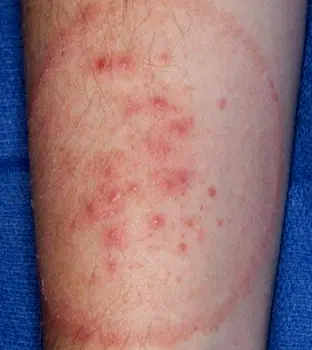
Ringworm is a contagious fungal infection caused by dermatophytes, not a worm. On the body, it often appears as an itchy, scaly, expanding rash with a ring-like shape. The center may look clearer than the raised or more active edge, but appearance can vary.
A circular rash is not automatically ringworm. Eczema and other skin conditions can look similar, so self-diagnosis based only on shape can be unreliable. If the rash is unusual, persistent, rapidly changing, or does not respond to appropriate treatment, a healthcare professional can help confirm the cause.
Body ringworm is different from infection involving the scalp or nails. Scalp ringworm usually requires prescription antifungal medicine taken by mouth; creams, lotions, or powders do not work adequately there. Nail ringworm also generally needs professional evaluation and prescription treatment. These infections should not be managed as though they were a small patch of ringworm on the arm or trunk.
Ringworm can spread through contact with an infected person or animal, as well as through contaminated objects and surfaces. Avoiding contact with the rash and not sharing personal items can reduce transmission while you determine whether the rash is truly ringworm.
What Actually Treats Ringworm at Home
For limited ringworm on the skin, the evidence-based home treatment is a nonprescription topical antifungal product. CDC-listed active ingredients include clotrimazole, miconazole, terbinafine, and ketoconazole. These medicines are intended to act against the fungal infection rather than simply reduce itching or dryness.

Choose and use the product according to its individual label. There is no single schedule that applies to every antifungal, formulation, body site, or product strength. Read the directions carefully, including instructions about how much to apply, how often to use it, and how long to continue. If you are uncertain whether a product is appropriate, ask a pharmacist or healthcare professional.
The rash may look better before the infection has been fully treated. Treatment duration varies by product and may extend beyond visible improvement. Complete the labeled course unless a healthcare professional gives different instructions. Stopping as soon as the redness or itching fades can leave the infection inadequately treated.
Topical antifungals are intended for appropriate limited skin infections. They are not a substitute for evaluation of scalp or nail involvement, widespread or severe disease, an uncertain diagnosis, or a rash that fails to improve after correctly used nonprescription treatment.
Understanding Ringworm: Causes, Treatment, and Misconceptions
What to Know About Popular Natural Remedies
Apple cider vinegar, tea tree oil, coconut oil, turmeric, aloe vera, garlic, oregano oil, and lemongrass oil are often promoted for skin problems. These remedies are not established substitutes for a nonprescription antifungal when the goal is to eliminate ringworm.
Some substances may show antifungal activity in laboratory testing, but that does not demonstrate that they cure dermatophyte infections in people. Aloe vera or another soothing substance might make irritated skin feel more comfortable without treating the fungus. Laboratory findings and symptom relief should not be confused with a clinical cure.
Natural products can also irritate the skin, particularly when applied in concentrated forms or to already inflamed tissue. Added irritation may increase discomfort and make it harder to judge whether the infection is improving. A remedy that delays effective antifungal treatment or professional assessment can allow the infection to persist or spread.
This does not mean every natural product will cause harm in every situation. The important limitation is that evidence is insufficient to rely on these remedies as treatment for ringworm. Avoid using them as a replacement for a labeled antifungal product, and do not let experimentation postpone medical care when the diagnosis is uncertain or the infection is not improving.
Safe Skin Care During Treatment
Supportive skin care can make treatment easier and may help limit spread. Keep the affected area clean and dry, and wash your hands after touching the rash or applying medication. Avoid picking or scratching when possible, since this can further irritate the skin and transfer fungal material to other areas.

Use the antifungal exactly as directed on the product label. Do not apply additional substances simply because the skin remains itchy or discolored. Persistent changes do not always mean treatment has failed, but worsening symptoms, spread, or uncertainty about the diagnosis warrants professional advice.
Hygiene supports treatment and reduces opportunities for transmission, but it does not eradicate the fungal infection by itself. Cleaning the skin without using an effective antifungal will not replace treatment for ringworm.
During an infection, do not share towels, clothing, bedding, combs, or other personal items that may contact the affected skin. Wash your hands after contact with pets as well, because animals can carry and spread dermatophytes. Broader measures for household members, shared spaces, and potentially infected pets are important when preventing transmission.
Preventing Ringworm From Spreading or Returning
Ringworm can pass between people, from animals to people, and through contaminated objects or surfaces. Practical prevention focuses on reducing those opportunities rather than guaranteeing that transmission will not occur.
Avoid sharing towels, clothing, bedding, combs, brushes, and sports equipment. Clean relevant clothing, towels, bedding, and sports gear during an infection, and keep skin clean and dry. In communal showers or locker rooms, wear footwear rather than walking barefoot. These steps are especially useful when several people share living, athletic, or recreational spaces.
If a pet has areas of hair loss, scaling, or other signs that could indicate a fungal infection, arrange veterinary assessment. Treating only a person while an infected animal continues to spread the fungus can make repeated exposure more likely. Do not assume that an animal is infected based on appearance alone; a veterinarian can assess the cause.
Wash your hands after touching a potentially affected animal or person and after handling items that may have contacted the rash. Keep personal belongings separate while treatment is underway. Prevention measures lower the chance of spread, but they do not replace antifungal treatment for an active infection.
Treatments and Mistakes to Avoid
Do not use a corticosteroid cream on a suspected or confirmed ringworm rash unless a healthcare professional specifically directs you to do so. Corticosteroids can worsen ringworm and change its appearance, which may make the infection harder to recognize. The altered appearance can also allow the infection to spread while giving the impression that the inflammation is being treated.

Another common mistake is relying on a natural product instead of an antifungal medicine with directions for treating fungal skin infections. Vinegar, essential oils, plant oils, garlic, turmeric, coconut oil, or soothing gels should not delay effective treatment or professional evaluation. Even if one reduces irritation temporarily, symptom relief does not establish that the fungus has been eliminated.
Do not stop a labeled antifungal course solely because the rash looks better. Visible improvement can occur before treatment is complete, and the product label may direct continued use beyond that point. Follow the selected product's instructions rather than combining products or creating an improvised schedule.
If the rash becomes more extensive, more painful, increasingly irritated, or otherwise concerning, reassess the diagnosis and seek medical advice. A rash that resembles ringworm may have another cause, and repeated self-treatment can postpone the care needed for that condition.
When to Contact a Healthcare Professional
Seek professional care if ringworm affects the scalp or nails, is widespread or severe, or does not improve after correctly using a nonprescription antifungal according to its label. Scalp ringworm generally requires prescription antifungal medicine taken by mouth because creams, lotions, and powders do not work adequately for that site. Nail ringworm also generally requires evaluation and prescription treatment.
Arrange earlier medical guidance if you have a weakened immune system. Professional assessment is also appropriate when you are unsure that the rash is ringworm, particularly if it does not have a typical appearance or continues to change despite appropriate care. Other skin conditions can resemble ringworm, so persistent treatment failure may reflect an incorrect diagnosis rather than a need for more home remedies.
A healthcare professional can assess the affected site, extent, and appearance and decide whether testing or prescription treatment is needed. Do not use corticosteroid cream to suppress an undiagnosed rash unless directed by a professional, because it can worsen or disguise ringworm.
For a limited, uncomplicated patch on ordinary skin, a correctly used nonprescription topical antifungal may be appropriate. The need for evaluation increases when the infection involves a difficult-to-treat site, affects a person with weakened immunity, becomes extensive or severe, or fails to improve with proper treatment.
Ringworm is a contagious fungal infection that often appears as an itchy, scaly, ring-shaped rash, though not every circular rash is ringworm. For a limited patch on ordinary skin, the evidence-based home treatment is a nonprescription topical antifungal containing an ingredient such as clotrimazole, miconazole, terbinafine, or ketoconazole. Use the product exactly according to its label, including how long to continue, because visible improvement can occur before the infection is fully treated. Popular natural remedies like apple cider vinegar, tea tree oil, coconut oil, turmeric, and aloe vera are not established substitutes for an antifungal, may irritate the skin, and can delay effective treatment.
Do not use a corticosteroid cream on a suspected or confirmed ringworm rash unless a healthcare professional directs you to, because corticosteroids can worsen the infection and change its appearance. If the rash affects the scalp or nails, is widespread or severe, does not improve after correctly using a nonprescription antifungal, or you have a weakened immune system, seek professional care. Scalp ringworm generally requires prescription antifungal medicine taken by mouth, and nail ringworm also usually needs professional evaluation and prescription treatment. A healthcare professional can also confirm the cause, since other skin conditions can resemble ringworm.
Published by: Centers for Disease Control and Prevention
Published by: American Academy of Dermatology
Questions and feedback
Please leave out passwords, medical record numbers, insurance details, financial information, exact addresses, and any other confidential or directly identifying details from your message.