
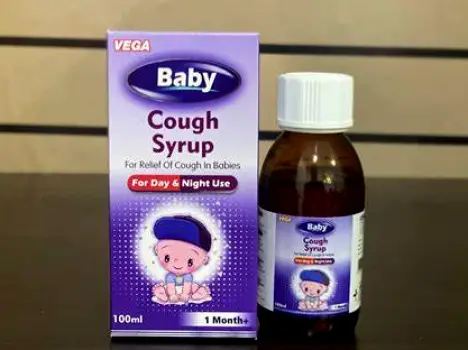
 h2>Can Babies Take Cough Syrup?
Caregivers should not give a baby an over-the-counter cough-and-cold medicine unless a healthcare professional has specifically directed its use. In the United States, the FDA does not recommend these medicines for children younger than 2 because they can cause serious, potentially life-threatening adverse effects, including slowed breathing.

This FDA recommendation is not the same as the age warning commonly printed on product labels. Manufacturers voluntarily label many over-the-counter cough-and-cold products, 'Do not use in children under 4 years of age.' The under-2 FDA recommendation and the under-4 manufacturer warning are separate safety statements, not one combined age cutoff.
A product labeled 'baby' is not automatically safe or appropriate for every infant. Front-label terms such as 'natural,' 'gentle,' or 'for babies' do not establish that a product is FDA-approved, effective, or suitable for a particular child. Cough-and-cold medicine also does not change the natural course of a cold or make it resolve faster. For an infant with a cough, ask a pediatric clinician or pharmacist before giving any product.
Why Babies Cough and What the Cough Is Doing
Most coughs in infants are associated with colds. A cough is a protective reflex that helps clear mucus and other irritants from the airway. Because of this, eliminating every cough is not necessarily the goal. A cough may help a baby clear secretions, even though it can be tiring or disruptive.
A baby's cough can also occur with conditions that need medical assessment, including bronchiolitis, pneumonia, whooping cough, or an object blocking the airway. Symptoms alone do not allow a caregiver to determine the cause reliably. Breathing effort, feeding, hydration, color, behavior, age, and how the illness changes over time are more useful when deciding how urgently to seek care.
Cough medicines can create their own risks without addressing the underlying cause. Supportive care is often used to ease congestion and help a baby remain comfortable while the illness follows its course. A clinician can help determine whether a cough needs evaluation, particularly in a very young infant or when symptoms are worsening.
Understanding OTC cough medicine safety for babies
What Products Marketed as Baby Cough Syrup May Contain
'Cough syrup' describes a liquid product or marketing category, not one standardized ingredient or evidence category. A bottle sold as baby cough syrup may be a conventional over-the-counter cough-and-cold medicine, a combination product containing several active ingredients, a homeopathic product, or a non-drug soothing syrup.
Conventional medicated products may contain one or more drug ingredients intended to affect cough, congestion, or other cold symptoms. Multi-ingredient products require particular care because two different bottles can contain the same active ingredient. Giving both can lead to accidental overdose.
Homeopathic products are a separate category. The FDA states that there are no FDA-approved homeopathic products and that it is not aware of proven benefits from homeopathic cough-and-cold products. The term 'homeopathic' does not establish safety or effectiveness for an infant.
Non-drug soothing syrups may contain ingredients such as agave or herbs, but a product's presence on a store shelf or its use of terms such as 'natural,' 'organic,' 'daytime,' or 'nighttime' does not prove that it helps a baby's cough. Read the active-ingredient section, age directions, warnings, and full ingredient list rather than relying on the front label. If the contents or age guidance are unclear, do not give the product until a healthcare professional has reviewed it.
Why Medicated and Homeopathic Products Can Be Risky
Infants and young children can experience serious adverse effects from cough-and-cold medicines, including slowed breathing. The risk is especially concerning when a product is given at the wrong age, in an excessive amount, more often than directed, or together with another product containing the same ingredient.
Adult medicines should never be given to children. A smaller amount of an adult formulation is not automatically an appropriate infant dose. Combination products can also make errors more likely because one bottle may contain several active ingredients. A caregiver may unknowingly give the same ingredient again in a second medicine marketed for a different symptom.
Homeopathic labeling does not remove these concerns. The FDA has no approved homeopathic products and urges caregivers not to give homeopathic cough-and-cold products to children younger than 4. 'Homeopathic,' 'natural,' and 'baby' are not substitutes for evidence of safety or effectiveness.
If a clinician recommends a medicine for a specific situation, use only the product and directions reviewed with that clinician. Do not assume that another syrup with a similar purpose, a different concentration, or a more appealing label can be substituted. When a baby has received too much medicine or an uncertain combination, contact a healthcare professional or poison control service promptly for guidance.
Safer Ways to Ease Cough and Congestion
Supportive measures can ease congestion and help a baby remain comfortable without exposing the child to cough-and-cold drugs. Options listed by the FDA for infants and children include:

- Continue breastmilk or formula to support fluid intake.
- Use saline nose drops or spray as directed.
- Use gentle nasal suction, with or without saline, to help clear the nose.
- Use a cool-mist humidifier when appropriate. The FDA advises against warm-mist humidifiers in this context.
These steps may reduce congestion or make breathing and feeding more comfortable, but they do not cure a viral illness or make it end sooner. Use gentle suction and follow the instructions for any device being used.
Do not give honey to a child younger than 12 months. Pediatric guidance recommends honey for cough only for children at least 1 year old, so honey is not an infant remedy. Do not assume that agave has the same evidence or safety guidance as honey, and do not treat products containing either ingredient as interchangeable.
Fever medicines are a separate issue from cough syrup. If a clinician recommends one, ask for product-specific directions rather than adapting a dose from another medicine or relying on a household spoon.
How to Avoid Medication and Dosing Errors
When a clinician recommends medicine, follow the specific product label and the professional instructions exactly. Measure the medicine with the dosing syringe or cup supplied for that product. Do not use a household spoon, and do not use a measuring device from another medicine because its markings or capacity may differ.

Check the active ingredients before giving any product. This is especially important with combination medicines and when more than one caregiver may be giving medication. Two products with different brand names can contain the same ingredient. Keeping a written record of the product, amount, and time given can help caregivers avoid repeating a dose.
Do not give an adult formulation to a baby. Do not create a smaller dose by guessing, split a dose based on another product, or substitute one ingredient for another without professional direction. Doses and schedules depend on the specific medicine and the child's circumstances, so they should come from the prescribing clinician, pharmacist, or product instructions that apply to that medicine.
Store medicines where children cannot reach them and keep each product in its original container. If the label is unclear, the measuring device is missing, or another caregiver has already given a medicine, pause before giving more and obtain professional advice.
When a Baby's Cough Needs Medical Care
Seek emergency medical care for severe breathing difficulty, stopped breathing, loss of consciousness, or blue lips or face. These signs require immediate attention rather than observation at home.

Contact a clinician promptly if the baby has wheezing, stridor, unusually fast or labored breathing, markedly reduced milk intake, signs of dehydration, unusual sleepiness, appears very ill, or is getting worse. Poor feeding can be important because congestion or breathing problems may interfere with a baby's ability to take enough fluid.
The FDA advises calling a doctor for a temperature of 100.4°F (38°C) or higher in an infant aged 2 months or younger. This threshold should not be extended automatically to babies in other age groups; ask a healthcare professional how fever should be assessed for the baby's age.
Very young age lowers the threshold for contacting a clinician. Seattle Children's advises contacting a doctor within 24 hours for a coughing infant younger than 6 months, even without another listed urgent feature. A symptom checklist cannot identify the cause of a cough, so a clinician may need to assess the baby directly.
What to Expect and When to Follow Up
A viral cough may continue after other cold symptoms begin to improve. Viral coughs commonly last 2 to 3 weeks, but this is a general expectation rather than a guarantee that a longer cough is harmless. Cough-and-cold medicine does not shorten the natural course of a cold.
Arrange follow-up if the cough lasts longer than 3 weeks, if the baby becomes worse, or if you remain concerned at any point. A cough that changes in character, interferes increasingly with feeding, or does not follow the expected pattern also deserves professional attention.
Do not wait for a usual duration to pass if the baby develops urgent symptoms. The expected course of a viral cough does not rule out a more serious illness, particularly in a very young infant. When in doubt, contact the baby's healthcare professional and describe the child's age, feeding, breathing, temperature, and how the cough has changed.
Caregivers should not give a baby over-the-counter cough-and-cold medicine unless a healthcare professional has specifically directed its use. The FDA does not recommend these medicines for children younger than 2 because they can cause serious adverse effects, including slowed breathing. Products labeled “baby,” “natural,” or “homeopathic” are not automatically safe or effective for infants, and the FDA states there are no approved homeopathic products. Cough-and-cold medicine also does not shorten the duration of a cold.
Safer supportive measures include continuing breastmilk or formula, using saline nose drops with gentle nasal suction, and using a cool-mist humidifier. Honey should not be given to children younger than 12 months. Most infant coughs are associated with colds and serve a protective function by clearing mucus from the airway.
Seek emergency care for severe breathing difficulty, stopped breathing, or blue lips or face. Contact a clinician promptly for wheezing, labored breathing, markedly reduced feeding, signs of dehydration, or unusual sleepiness. The FDA advises calling a doctor for a temperature of 100.4°F (38°C) or higher in infants aged 2 months or younger. Viral coughs commonly last 2 to 3 weeks; arrange follow-up if the cough lasts longer, worsens, or causes concern at any point.
Published by: U.S. Food and Drug Administration
Published by: American Academy of Pediatrics
Published by: Centers for Disease Control and Prevention
Questions and feedback
Please leave out passwords, medical record numbers, insurance details, financial information, exact addresses, and any other confidential or directly identifying details from your message.